

As 2025 draws to a close, we’re celebrating another remarkable year of growth, collaboration and innovation at touchRESPIRATORY.
From thought-provoking expert interviews and peer-reviewed research to dynamic conference coverage and an expanding portfolio of medical education, this year has been defined by meaningful conversations and impactful learning. We’ve had the privilege of engaging with leading clinicians, researchers and partner societies across the globe – bringing together diverse voices to support the respiratory community with timely, accessible and authoritative content.
As we reflect on the past 12 months, we’re proud to highlight the moments, milestones and stories that shaped our year.
Here are just some of the standout highlights from 2025.
Conference and news coverage
We’ve been hard at work this year covering leading international conferences, including EAACI, ATS, ERS and CHEST, highlighting ground-breaking policy, and the latest clinical updates. From news roundups to rapid-fire news blasts, we’ve made staying informed about the latest in respiratory and pulmonary medicine quicker and easier than ever.
Top 5 most viewed interviews
1. Phase 2 TIDE-Asthma study explores amlitelimab’s targeted immune approach
The phase 2 TIDE-Asthma study is investigating amlitelimab, an OX40L inhibitor, as an add-on therapy for moderate-to-severe asthma. In this Q&A, Dr Praveen Akuthota discusses the drug’s mechanism of action, study aims and design, key clinical endpoints, the findings shared at the ERS International Congress 2025, and the potential impact on future asthma treatment.
2. Phase 2 trial reveals promising efficacy of inhaled itraconazole in ABPA-complicating asthma
A Phase 2, multicentre trial is evaluating a novel inhaled formulation of itraconazole in patients with ABPA-complicating asthma. This study aims to assess the safety, optimal dosing, and potential clinical benefits of delivering antifungal therapy directly to the lungs, addressing a key unmet need in this challenging condition.
3. Vapendavir for rhinovirus-triggered COPD exacerbations: phase 2a study results
A phase 2a study presented at ERS 2025 explored the potential of vapendavir, an oral antiviral, to treat rhinovirus-triggered COPD exacerbations. Rhinoviruses are the leading cause of COPD flare-ups, driving hospitalizations, healthcare costs, and long-term lung decline. The study demonstrated that vapendavir was well tolerated, reduced symptom severity, improved lung function, and accelerated recovery, highlighting its promise as a novel therapeutic approach for managing COPD exacerbations.
4. Allergic rhinitis in 2025: Expert strategies for optimizing treatment and clinical best practice
Allergic rhinitis is a common and often underdiagnosed condition that can impact asthma control, sleep, and daily functioning. In this Q&A, Dr Syed Shahzad Mustafa discusses his CHEST 2025 presentation, reviewing first-line therapies, allergen avoidance strategies, and the evolving role of immunotherapy and biologics, offering practical guidance for clinicians to optimize patient care in 2025.
5. Clinical trials in fibrotic ILDs: New therapeutic targets and the rise of precision medicine
As the therapeutic landscape for fibrotic interstitial lung diseases (ILDs) continues to evolve, new trials are redefining targeted treatment and precision medicine approaches. In this Q&A, Dr Tejaswini Kulkarni discusses her CHEST 2025 presentation, highlighting emerging therapeutic targets, the role of biomarkers, recruitment challenges, and innovative trial designs shaping the future of fibrotic ILD research.
Top viewed news articles
Launch of the ‘Future Leaders’ initiative
Introducing the touchRESPIRATORY Future Leaders 2025
As touchRESPIRATORY approaches 10 years of providing education for busy respiratory specialists, we are looking to the future—and it certainly looks bright!
This year, we are celebrating our inaugural touchRESPIRATORY Future Leaders to recognize the outstanding talent that has entered our field in recent years. These individuals are set to innovate and transform respiratory and pulmonary medicine in the years to come.
Following the success of this year’s programme, we’re excited to announce that nominations for the 2026 cohort will open early next year.
Journal highlights
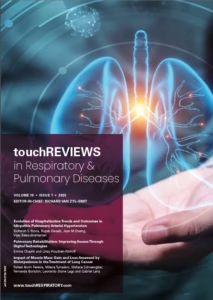 Volume 10, Issue 1 of touchREVIEWS in Respiratory & Pulmonary Diseases is now online here.
This edition covers a range of insightful content on important topics, including asthma, chronic obstructive pulmonary disorders, lung cancer and pulmonary arterial hypertension.
Top 5 most viewed articles
1. The Impact of Smart Inhalers on Personalized Asthma Management
Digital or ‘smart’ inhalers offer a unique opportunity to support personalized asthma management by combining data on inhaler use with features such as medication reminders, technique assessment and feedback, linkage with location or environmental data and facilitation of clinician–patient adherence discussions. In this article, we discuss and summarize research relating to smart inhalers for asthma, providing current insights and future directions for asthma management.
2. Impact of Muscle Mass Gain and Loss Assessed by Bioimpedance in the Treatment of Lung Cancer
Lung cancer is the leading cause of cancer-related deaths and the second-most common cancer worldwide. Body composition, including muscle mass and body fat distribution, may significantly influence patient outcomes. Bioelectrical impedance analysis (BIA) offers a simple and affordable method to assess body composition; yet, it remains underutilized in lung cancer treatment protocols. This article explores how BIA could serve as a valuable tool in lung cancer care, enabling more effective assessment of body composition. It also highlights the critical role of maintaining muscle mass during treatment, as greater muscle reserves have been associated with fewer chemotherapy side effects, prolonged survival and improved quality of life. Recognizing the importance of body composition in lung cancer management could refine treatment strategies and enhance patient care.
Limited data exist on the impact of race on incidence and survival of lung cancer among adolescents and young adults (AYAs) aged 15–39 years. We examined the Surveillance, Epidemiology, and End Results (SEER) Plus Data to determine the association of demographic factors with incidence trends and survival in AYAs.
4. Pulmonary Rehabilitation: Improving Access Through Digital Technologies
The benefits of pulmonary rehabilitation (PR) are well established. However, barriers to being able to access, attend and complete a PR programme are also well documented. Over the years, this has led to a number of alternative models being developed, including digital technologies. Furthermore, nowadays more people are being diagnosed with a chronic respiratory disease at an earlier age, and alternative modes need to be available to provide access to this evidence-based intervention. However, these alternative digital models have their uncertainties due to the lack of evidence base.
5. Evolution of Hospitalization Trends and Outcomes in Idiopathic Pulmonary Arterial Hypertension
Idiopathic pulmonary arterial hypertension (IPAH)-related hospitalizations contribute to morbidity and mortality and incur substantial healthcare costs. Several advances in management have been achieved over the last decade. The objective of this study is to compare IPAH hospitalizations from 2007 and 2017 using the Nationwide Inpatient Sample database. This is a retrospective, observational and population-based cohort analysis. IPAH was identified using the International Classification of Diseases Ninth Revision, Clinical Modification (ICD-9-CM) (416.0) and ICD-10-CM codes (I27.0) for 2007 and 2017, respectively. Total hospitalizations, demographics, all-cause mortality, median length of stay and median charges were analysed. IPAH diagnosis was associated with 0.05% of all hospitalizations in 2007 and 0.03% in 2017, higher in females compared with males (11,542 [65.2%] in 2007 versus 6,380 [68.4%] in 2017), but higher mortality in males. White patients accounted for 9,349/17,713 (67.4%) of all hospitalizations in 2007 and 5,755/9,330 (64.1%) in 2017. Total all-cause mortality (IPAH hospitalization) decreased in 2017 (4.8%) compared with 2007 (6.4%) (p<0.001). Total charges in United States Dollars (USD) increased substantially from 2007 to 2017 ($26,016 versus $46,450), but decreased when compared with overall hospitalization cost. Over the decade evaluated, there have been significant reductions in IPAH–related hospitalizations, reduced all-cause mortality related to hospitalization and decreased healthcare costs.
Visionary Voices podcast
At Touch, we understand that healthcare professionals learn in different ways. Visionary Voices expands our content variety, ensuring we offer educational resources that cater to all learning preferences. Season 2 recently wrapped, with series 3 on the way…
Top 5 most viewed episodes
1. The Breathlessness Toolkit: Non-pharmacological strategies to support your patients
In this episode, Professor Irene Higginson, Director of Better Health and Care Futures at King’s College London, discusses the complex challenges of managing breathlessness. She explores non-pharmacological strategies, the value of multidisciplinary care, and how the Breathlessness Support Services at KCL are transforming patient support. Tune in for expert insights and a look at future directions in breathlessness research and care.
2. What impact does sleep have on physicians and their patients?
We all know sleep is important, but what happens when physicians don’t get enough? In this episode of Visionary Voices, we welcome Associate Professor Grace Vincent from CQUniversity’s Appleton Institute. A leading expert on sleep and shift work, Grace explores how disrupted sleep affects physician health in both the short and long term, as well as its impact on safety and performance. We also discuss what this means for patient outcomes and share practical strategies to manage sleep loss.
3. Could senolytics change the treatment landscape of age-related diseases?
In this episode, Nicky speaks with Prof. Georgina Ellison-Hughes from King’s College London about the groundbreaking field of senolytics and their potential to advance the treatment of age-related diseases. From understanding the science behind cellular senescence to how senolytic drugs work and what early clinical trials reveal, this episode explores an exciting frontier in longevity medicine.
4. Latest on preventing and managing childhood food allergies
In this episode, we speak with leading paediatric allergist Prof. Helen Brough to explore the key factors behind why some children develop allergies to foods such as peanuts, and what we can do to help prevent them. We also examine the latest developments in managing food allergies and the innovations on the horizon that could transform how we treat them.
5. Is pharma for me? Navigating the move from agency, clinic or academia
Whether you’re working in an agency, in a clinical role, or in academia, many healthcare professionals wonder what lies behind the doors of the pharmaceutical industry.
Highlighting society partnerships
Our collaborations with leading professional societies continue to be a cornerstone of our work.
This year, we strengthened these partnerships to amplify expert voices, support awareness days and bring forward the latest developments shaping the care of respiratory and pulmonary diseases. Below are some of the key moments from our society collaborations in 2025.
EUFOREA has expanded its Patient Portal to include asthma, offering reliable, expert-backed resources for people living with chronic respiratory diseases (CRDs) such as asthma, chronic rhinosinusitis (CRS), and COPD. In this Q&A, Dr Sophie Scheire, EUFOREA’s Patient Education Manager, discusses how the portal helps bridge the knowledge gap, combat misinformation, and empower patients to take charge of their health, while also supporting healthcare professionals in providing better care.
Celebrating 25 years of the Pulmonary Fibrosis Foundation: driving awareness, research, and support
The Pulmonary Fibrosis Foundation (PFF) is marking a major milestone in 2025: 25 years of progress in improving the lives of those affected by pulmonary fibrosis (PF). Since its founding in 2000, PFF has become a leading voice in patient support, education, research funding, and advocacy.
The American Lung Association pilot program for smoking cessation
The American Lung Association (ALA) just completed their newly piloted freedom from smoking program curriculum, tailored to black communities ‘Freedom From Smoking®: My Glory. My Journey. Living a Tobacco-Free Life’. With the pilot complete, the team at HMA has been sharing these successes with local organizations and health systems in hopes to gain traction and interest to expand the program throughout the black community.
The current treatment landscape for severe asthma faces major challenges despite biologic advances targeting type 2 inflammation. Current biomarkers like BEC and FeNO inadequately predict treatment response. To optimize precision medicine, improved molecular phenotyping and novel non-invasive biomarkers are urgently needed to better identify asthma endotypes and guide therapy.
Reflections from #RTI2025: Breathing New Life into Respiratory Tract Infection Research
Back in February 2025, the 7th Forum on Respiratory Tract Infections (RTI) took place at the iconic Glasgow Science Centre – a fitting venue for a scientific conference built on innovation, collaboration and ground-breaking research. Each year RTI continues to grow in size, ambition, and impact – bringing together a thriving global respiratory community, bridging the gap between lab researchers and front-line clinicians. This is what makes the RTI forum so special.
- 2025 Global Chronic Rhinosinusitis with Nasal Polyp Syndrome Awareness Day #LetsTalkCRS
- Launch of the new COPD module: EUFOREA patient portal
- World Bronchiectasis Conference 2025: Australia to host global gathering on diversity and innovation in care
- Fostering patient education through EUFOREA’s Patient Portal
As we wrap up an exciting year of growth, new content formats and meaningful collaborations, we’re immensely proud of the progress made across touchRESPIRATORY. With even more innovations, insights and educational initiatives on the horizon, we look forward to bringing you an even stronger year of content in 2026.
Cite: touchWRAPPED 2025: Your top reads, watches and listens in respiratory and pulmonary medicine. touchRESPIRATORY. 16 December 2025.
Disclosures: This article was created by the touchRESPIRATORY team utilizing AI as an editorial tool (ChatGPT (GPT-4o) [Large language model]. https://chat.openai.com/chat.) The content was developed and edited by human editors. No funding was received in the publication of this article.
Related content
- Introducing the touchRESPIRATORY Future Leaders 2025
- Celebrating 25 years of the Pulmonary Fibrosis Foundation: driving awareness, research, and support
- A year in review: Expert voices on the developments that defined 2025
Register now to receive the touchRESPIRATORY newsletter!
Don’t miss out on hearing about our latest peer reviewed articles, expert opinions, conference news, podcasts and more.