


Central and peripheral vasopressors: What is safe?
Vasopressors are a mainstay of treatment for patients with shock.1 Historically, prolonged or high-dose vasopressors have been administered through central venous catheters (CVCs), a practice that stems from safety concerns following early reports of severe ischemic tissue injury due to peripheral vasopressor extravasation.2–4 Peripheral intravenous (PIV) access in these reports was often via metal cannulae secured with the venous […]
Who’s on your bench? The five people every high performer needs
Your clinical career is shaped not only by what you know, but by who helps you navigate what comes next. Join us for the final episode in our mini-series exploring non-clinical skills that can help you thrive in your clinical career. Today we explore how to develop the right team around you to support your work, and what building that bench can mean for your career, and the life you build alongside it.
Restoring lung tissue regeneration pathways in AATD-related emphysema
Alpha-1 antitrypsin deficiency (AATD) is a rare genetic disorder that can lead to progressive, early-onset emphysema, with no current therapies able to reverse established lung damage. In this interview, Dr Karina A. Serban and Dr Maria Magallon Serrano discuss the unmet needs in AATD-related emphysema, the rationale for investigating lithium as a potential treatment, key findings from their preclinical study presented at ATS 2026, and the implications for future clinical trial development.
How the American Lung Association programs advance asthma education and self-management
Effective asthma management requires more than medication alone. Education, self-management support, and early intervention are essential to helping patients achieve better symptom control and improved quality of life. To address these needs, the American Lung Association has developed a range of evidence-based asthma programs for both adults and children, designed to build practical skills, improve adherence, and support long-term disease management across home, school, and community settings.
01. Central and peripheral vasopressors: What is safe?
02. Who’s on your bench? The five people every high performer needs
03. Restoring lung tissue regeneration pathways in AATD-related emphysema
04. How the American Lung Association programs advance asthma education and self-management

A 68-year-old woman with nodular bronchiectasis presents with persistent productive cough, intermittent regurgitation and recurrent ‘chest infections’ despite 12 months of once-daily proton pump inhibitor (PPI) therapy. Her clinician has doubled the PPI dose and is considering long-term azithromycin. Sputum has ...
Vasopressors are a mainstay of treatment for patients with shock.1 Historically, prolonged or high-dose vasopressors have been administered through central venous catheters (CVCs), a practice that stems from safety concerns following early reports of severe ischemic tissue injury due to ...
Your clinical career is shaped not only by what you know, but by who helps you navigate what comes next. Join us for the final episode in our mini-series exploring non-clinical skills that can help you thrive in your clinical career. Today we explore how to develop the right team around you to support your work, and what building that bench can mean for your career, and the life you build alongside it.

We often focus on clinical excellence, but spend less time developing broader skills that could help us better lead with purpose and build more fulfilling, impactful careers. In this episode, part of a mini-series in partnership with LEADderm, Dr Jennifer Soung and Denise Mann explore how clinicians can engage with the media to educate, empower and extend their impact beyond the clinic.


This activity is sponsored by GSK
Watch short presentations and panel discussion with leading respiratory experts, who'll discuss clinical remission as an ambitious but achievable treatment goal for patients with asthma, and how to implement and achieve this goal in routine clinical practice.

Want to be featured in touchReviews in Respiratory?
Share your knowledge, influence clinical practices and enhance patient care in Respiratory today!
- Peer-reviewed, free-to-access
- Accepting reviews, research and editorials
- No article processing fees
- Digital features and plain language summaries
- Multichannel content distribution for maximum visibility

Tuberculosis (TB) has risen once again, as of 2023, to return to being the world’s deadliest infectious disease. TB causes around one million deaths annually, leaving devastating impacts on patients and their communities.1 Historically, TB has been treated in separate ...

Tuberculosis (TB), an airborne infectious disease caused by Mycobacterium tuberculosis, spreads primarily when active in the lungs of patients with undiagnosed TB disease.1,2 TB infectivity and transmission continue to be an on-going and challenging concern, especially in high-incidence areas, requiring ...

Whether you’re working in an agency, in a clinical role, or in academia, many healthcare professionals wonder what lies behind the doors of the pharmaceutical industry. In this episode, Gina is joined by Sian Kneller, Director of Global Content Design at GSK and Founder of The Agency Advantage, to unpack exactly what it takes to make the leap. With over 20 years’ experience, from medical writer to leading global medical affairs strategy, Sian now helps others make a successful move into pharma. In this episode she shares what the transition really looks like, which transferable skills matter most, and how you can stand out in a competitive field.

In this episode, Nicky speaks with Prof. Georgina Ellison-Hughes from King’s College London about the groundbreaking field of senolytics and their potential to advance the treatment of age-related diseases. From understanding the science behind cellular senescence to how senolytic drugs work and what early clinical trials reveal, this episode explores an exciting frontier in longevity medicine.

In this episode of Visionary Voices, we welcome Associate Professor Grace Vincent from CQUniversity’s Appleton Institute. A leading expert on sleep and shift work, Grace explores how disrupted sleep affects physician health in both the short and long term, as well as its impact on safety and performance. We also discuss what this means for patient outcomes and share practical strategies to manage sleep loss.

We are deeply saddened to share the passing of Dr Ronald A Strauss, an esteemed member of the Editorial Board of touchREVIEWS in Respiratory & Pulmonary Diseases, who died on 12 January 2025 at the age of 80 in Cleveland Heights, OH, USA. ...

It is my great pleasure to introduce touchREVIEWS in Respiratory & Pulmonary Diseases, Volume 10, Issue 1, 2025. This issue brings together a collection of timely and thought-provoking articles addressing key challenges and emerging innovations across the spectrum of respiratory and pulmonary care. ...

Despite significant advances over the years in cancer care, lung cancer unfortunately remains the leading cause of cancer-related mortality and one of the overall leading causes of death in the USA.1 Understanding the complex interaction between our patients and their ...

Lung cancer remains the leading cause of cancer mortality and the second-most common cancer globally. In the USA, there were 238,340 new cases of lung cancer in 2023, according to the American Cancer Society.1 Worldwide, 2.2 million new cases were reported in 2020.2 Although ...

Pulmonary rehabilitation (PR) is one of the most cost-effective interventions for people with chronic respiratory disease.1 The evidence base is strong, demonstrating benefits of improving exercise capacity and health-related quality of life. Furthermore, it has been stated that research comparing ...

According to the Seventh World Symposium on Pulmonary Hypertension in 2024, pulmonary hypertension (PH) is defined as a mean pulmonary artery pressure (mPAP) of >20 mmHg. Pre-capillary PH is defined by mPAP of >20 mmHg and elevation of pulmonary vascular resistance (...

In this episode, we speak with leading paediatric allergist Prof. Helen Brough to explore the key factors behind why some children develop allergies to foods such as peanuts, and what we can do to help prevent them. We also examine the latest developments in managing food allergies and the innovations on the horizon that could transform how we treat them.




Introducing the touchRESPIRATORY Future Leaders 2025
As touchRESPIRATORY approaches 10 years of providing education for busy respiratory specialists, we are looking to the future—and it certainly looks bright!
This year, we are celebrating our inaugural touchRESPIRATORY Future Leaders to recognize the outstanding talent that has entered our field in recent years. These individuals are set to innovate and transform respiratory and pulmonary medicine in the years to come.
Selected by our expert Editorial Board and contributing faculty, we are proud to highlight their achievements so far and explore what the future holds for them. We had the pleasure of learning about their unique journeys, career motivations, and the inspirations that have shaped their paths. They also shared their perspectives on the most exciting advancements in their specialties today and their hopes for the future of the field.

“This is such an exciting time for the field! Both NTM and bronchiectasis are finally receiving the recognition they’ve long needed in both scientific and medical communities, which will ultimately benefit patients.”

“Poverty relief and improved access to healthcare are essential to tackling TB. This challenge, rooted in a complex socio-historical context, is both inspiring and a continuous journey of learning.”

“All health professionals share the responsibility of supporting research that is clinically meaningful and ethically sound.”
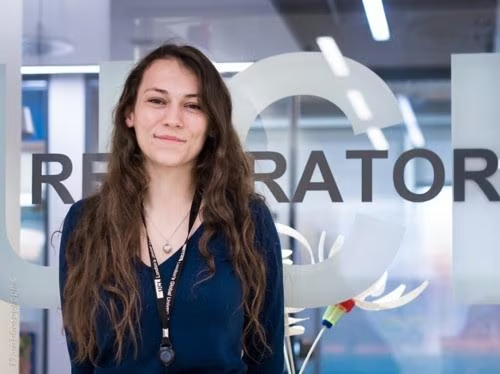
“Follow your interest and your curiosity; keeping a multidisciplinary approach really does help your research and help others.”
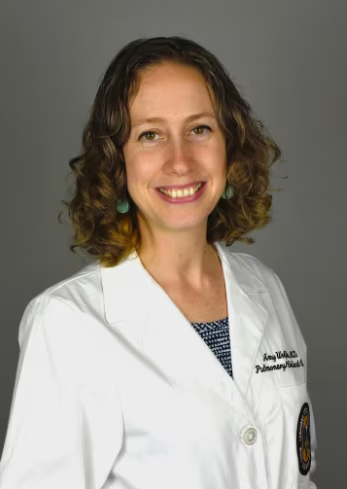
“Almost every patient in the ICU is having the worst day of their life, and there are a lot of opportunities for compassion alongside evidence-based care.”


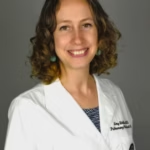
Editorial Board
Introducing the Editorial Board of touchREVIEWS in Respiratory, who support our mission to advance medical knowledge and practice by ensuring the integrity, relevance, and impact of the content we publish. Together, we strive to foster a vibrant academic community and contribute to the continuous improvement of healthcare worldwide.

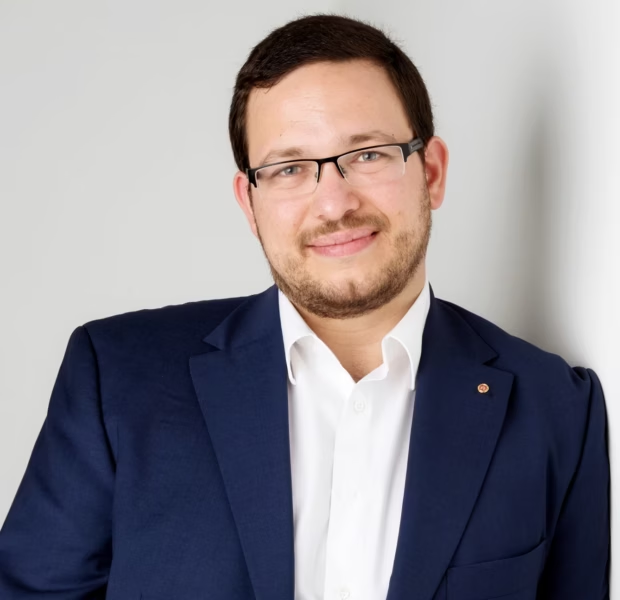
Alexander Mathioudakis
University of Manchester, Manchester, UK
Biography
Alexander G. Mathioudakis is a Senior Lecturer in Respiratory Medicine at the University of Manchester and Honorary Consultant Respiratory Physician at Manchester University NHS Foundation Trust. His research focuses on airway disease phenotypes and personalized medicine, as well as clinical research methodology, evidence-based medicine and health policy.

Tejaswini Kulkarni

Tejaswini Kulkarni
University of Alabama at Birmingham, Birmingham, AL, USA
Biography
Dr Kulkarni is an Associate Professor in the Division of Pulmonary, Allergy and Critical Care at the University of Alabama at Birmingham. As Director of the Interstitial Lung Disease Program there, she leads multidisciplinary efforts to improve diagnosis and treatment strategies for these complex fibrotic lung disorders. Her research focuses on identifying imaging and clinical biomarkers that enhance our ability to predict disease progression and therapeutic response in patients with ILD, and she also serves as principal/co-investigator on clinical trials investigating new therapeutics for ILD. In addition to her research and clinical roles, she serves as Chair of the ILD section at the American College of Chest Physicians and several committees at PFF, where she continues to promote education, collaboration, and innovation in ILD.
Alexander Mathioudakis
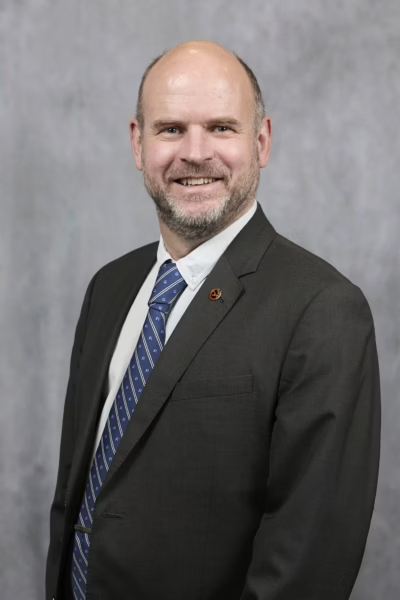
Richard Van Zyl-Smit
Editor-in-Chief

Richard Van Zyl-Smit
Groote Schuur Hospital & University of Cape Town, Cape Town, South Africa
Asthma & COPD
Biography
Professor Richard van Zyl-Smit is a Professor of Pulmonology and consultant pulmonologist, and Deputy Head of the Division of
Pulmonology, Department of Medicine at the University of Cape Town and Groote Schuur Hospital, Cape Town South Africa. He is a
principal researcher at the UCT lung Institute and past president of the South African Thoracic Society.
His major research interests are airways diseases specifically; asthma and COPD with a focus on tobacco, household air pollution, electronic cigarettes and their impact on pulmonary immune responses (to pneumococcal and mycobacterial infection) and the development of COPD, particularly in low-income settings. He is passionate about writing and mental health, having authored two books on mental health and sustainability in academia and medicine. During the peak of the COVID-19 pandemic he wrote weakly reflections on life through the lens of COVID-19 and ICU later published as ‘thoughts on a Saturday morning’. His first book, a personal reflection on burnout, academic pursuits and mental health.
Tejaswini Kulkarni
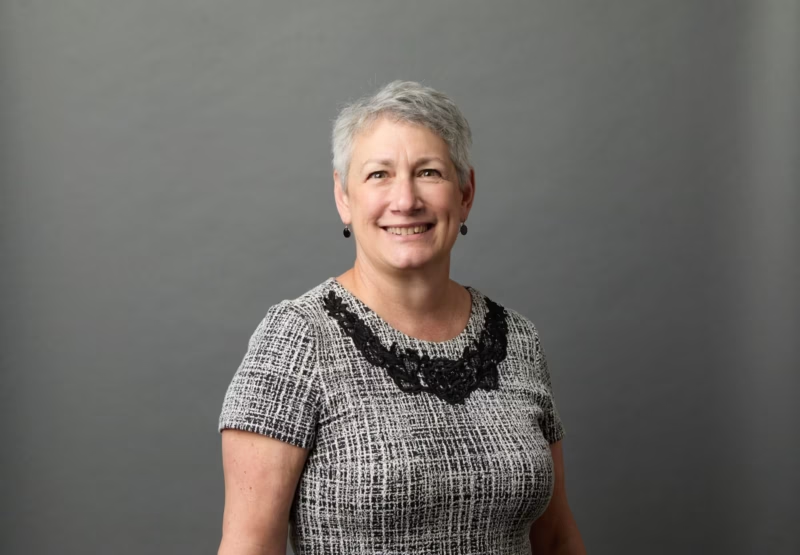
Margaret Pisani

Margaret Pisani
Yale University School of Medicine, New Haven, CT, USA
Biography
Dr Margaret A Pisani is an Associate Professor of Medicine at Yale University School of Medicine. Dr Pisani received a BS in physics from Iona College and an MS in biomedical engineering from New Jersey Institute of Technology. She received her MD from Temple University in 1994 and an MPH from Yale University in 2001. She did her internship, residency, and pulmonary and critical care fellowship at Yale University. In addition, she served as Chief Medical Resident at Yale. Dr Pisani then joined the faculty in the Department of Medicine, Division of Pulmonary, Critical Care and Sleep Medicine at Yale University School of Medicine. She has held several administrative and leadership roles at Yale including Associate Winchester Clinic Director, Director of Respiratory Care and Pulmonary & Critical Care Fellowship Program Director. Her research is based in the intensive care unit where she studies delirium and sleep in critical illness. She also studies the care of older ICU patients and functional and cognitive outcomes after critical illness. In addition, she collaborates on research of interventional pulmonary procedures, lung cancer screening and pleural disease.
Richard Van Zyl-Smit
Editor-in-Chief
Alexander Mathioudakis

 touchRESPIRATORY
Register Now!
Explore the latest in medical education and stay current in your field. Create a free account to track your learning.
- Save your progress for video
- Keep track of your CME credits
- Add personalised learning notes
- Receive updates from course leaders and faculty
- Be the first to hear about new and exciting interactive learning opportunities
Log into your Touch Account
Keep track of your clinical interests and newsletter subscriptions.
Sign up with an Email
Or use a .
Register now for FREE access
Already registered? Login below.
