
Respiratory Intensive Care

With multiple national and international meetings taking place throughout the year, deciding which conferences to attend isn't always straightforward. While scientific programs are an important consideration, opportunities for networking, collaboration, career development and practical learning can be just as valuable. To help identify the meetings making the biggest impact across respiratory and pulmonary medicine and related specialties, we asked members of the touchRESPIRATORY community their non-negotiable conferences and what makes them worth attending.

Join us as leading experts discuss key data and perspectives from ATS 2026 The American Thoracic Society (ATS) 2026 International Conference brought together the latest research and clinical insights across respiratory medicine, highlighting advances in diagnosis, treatment and patient care. In this ...

Patient–ventilator synchrony is crucial for effective mechanical ventilation, yet asynchrony is common and often under-recognized, with early signs requiring careful waveform interpretation. In this Q&A, John Davies outlines practical approaches to identifying and managing asynchrony, highlighting missed patterns such as false triggering and cycle asynchrony, and offering strategies to troubleshoot triggering, inspiratory flow, and cycling issues, alongside considerations for sedation and ongoing patient assessment.

Liberation from mechanical ventilation is a critical step in intensive care, requiring careful clinical judgement to balance the risks of premature extubation with prolonged ventilatory support. In this Respirology Reflections Q&A, Dr Ouellette explores practical considerations for assessing readiness for extubation, including the role of spontaneous breathing trials, sedation management and identifying reversible causes of failure. Strategies to reduce the risk of reintubation, including post-extubation respiratory support, are also discussed to help guide decision-making in everyday ICU practice.

In this episode of Visionary Voices, we welcome Associate Professor Grace Vincent from CQUniversity’s Appleton Institute. A leading expert on sleep and shift work, Grace explores how disrupted sleep affects physician health in both the short and long term, as well as its impact on safety and performance. We also discuss what this means for patient outcomes and share practical strategies to manage sleep loss.
As touchRESPIRATORY approaches 10 years of providing education for busy respiratory specialists, we are looking to the future—and it certainly looks bright! This year, we are celebrating our inaugural touchRESPIRATORY Future Leaders to recognize the outstanding talent that has entered our field in recent years. These individuals are set to innovate and transform respiratory and pulmonary medicine in the years to come.

As touchRESPIRATORY approaches 10 years of providing education for busy respiratory specialists, we are looking to the future—and it certainly looks bright!

Physician burnout is at a critical point. In this episode, Nicky speaks with Dr Alfred Atanda about why so many physicians are burning out and what can be done to change the trend. From personal experience to system-wide solutions, Dr Atanda shares valuable insights on improving physician well-being and building a more effective healthcare culture.

In this episode, we explore the future of continuing medical education (CME) with the team behind touchIME. Hannah Fisher and Matthew Goodwin share insights into global and US trends, the importance of patient inclusivity and how educational outcomes are evolving to better measure the direct impact of learning on clinical practice and patient care.
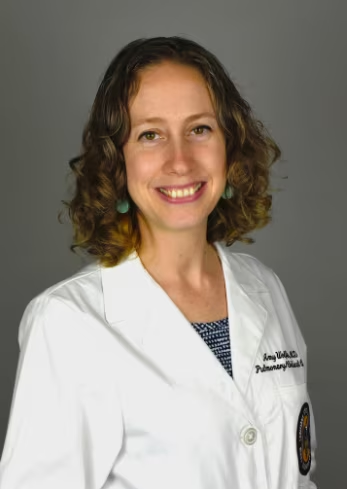
Improving Access and Outcomes in Pulmonary and Critical Care: A Q&A with Future Leader, Dr Amy Wolfe
As part of our Future Leaders series, we spoke with Dr Amy Wolfe, Director of the LSUHSC-Wetmore TB Clinic and Assistant Professor of Medicine at LSUHSC in New Orleans. A specialist in pulmonary and critical care medicine, Dr Wolfe shares how her early experiences in post-Katrina New Orleans inspired her focus on health equity. She discusses the challenges of treating TB in underserved communities, the importance of wraparound care, and promising innovations in pulmonology—from AI-based diagnostics to expanded access to pulmonary rehabilitation and lung cancer screening.
As part of our Future Leaders series, Dr Debasree Banerjee, Assistant Professor at Brown University, shares her journey in pulmonary and critical care medicine (PCCM), highlighting its dynamic, collaborative nature. Passionate about equity, her research addresses how race and racism impact care. Dr Banerjee emphasizes perseverance, multidisciplinary collaboration, and inspiring future physicians through advocacy and meaningful patient connections.
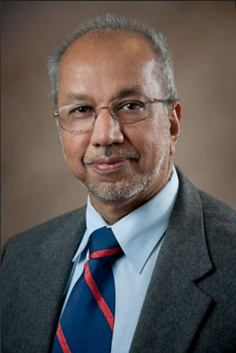
In this interview, Professor Juzar Ali, MD, FRCP(C), FCCP, a leading expert in respiratory medicine and LSU Alumni Klein Professor Emeritus of Medicine at Louisiana State University (LSU) Health Sciences Center in New Orleans, LA, USA, reflects on his distinguished career specializing in tuberculosis (TB), non-tuberculous mycobacterial disease (NTM) and bronchiectasis.
We are excited to welcome you to San Francisco for the ATS 2025 International Conference! Leaders, as well as emerging scientists and clinicians, who are at the forefront of medical breakthroughs and clinical innovation in pulmonary, critical care and sleep medicine will gather for networking and inspiring talks.


We were delighted to speak with our editorial board member Professor Margaret Pisani (Yale University School of Medicine, New Haven, CT, USA) around this year's research highlights in pulmonary, critical care and sleep medicine and what to look out for ...

It was a pleasure to meet with Dr Wayne Anderson (UNC School of Medicine, Chapel Hill, NC, US) to discuss his recent study evaluating the safety and tolerability of BIO‑11006 in patients with acute respiratory distress syndrome. 'A Phase II, ...
It was a pleasure to meet with Dr Wayne Anderson (UNC School of Medicine, Chapel Hill, NC, US) to discuss his recent study evaluating the safety and tolerability of BIO‑11006 in patients with acute respiratory distress syndrome. 'A Phase II, ...

Subcutaneous emphysema (SE) is relatively common in the intensive care unit (ICU) and often a complication of positive pressure ventilation.1,2 While typically self-limiting and benign, life-threatening sequela can develop. Progressive accumulation of subcutaneous air can result in significant compressive forces ...
Log into your Touch Account
Keep track of your clinical interests and newsletter subscriptions.
Sign up with an Email
Or use a .
Register now for FREE access
Already registered? Login below.
