 Obstructive sleep apnoea (OSA) is a common sleep-related breathing disorder often treated with positive airway pressure (PAP) therapy, though many patients struggle with adherence due to comfort and tolerance issues.
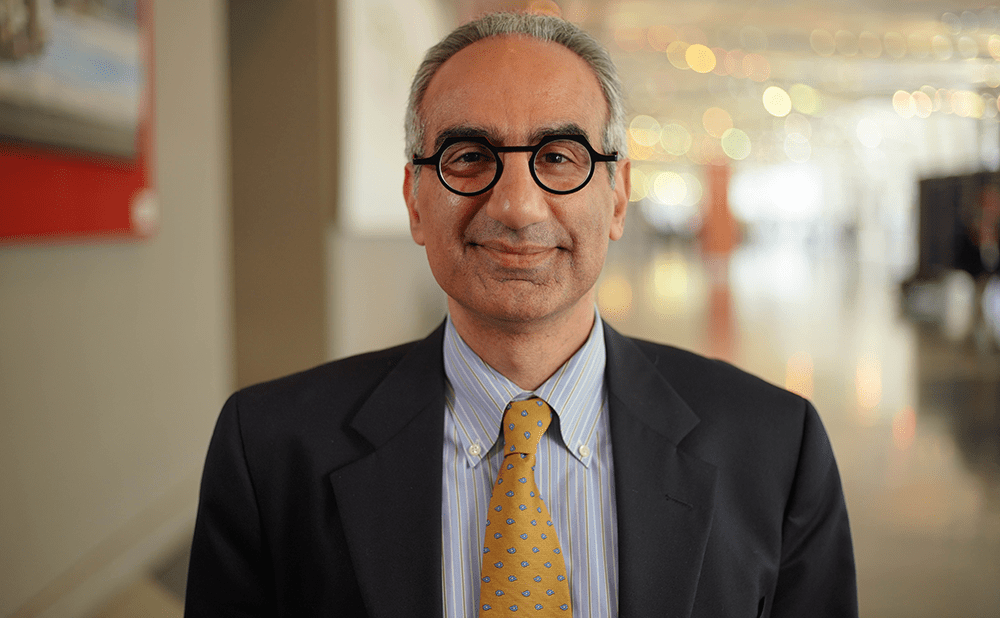
In this interview, Editorial Board Member Dr Carolyn D’Ambrosio (University of Miami Miller School of Medicine, Miami, FL, USA) explores the multifactorial nature of PAP intolerance in complex OSA, emerging alternative therapies, practical approaches to improve adherence, and future directions in personalized sleep medicine.
The talk “PAP Nonadherence in OSA: Management Strategies” was presented at CHEST 2025, 18–22 October 2025, Chicago, IL, USA.
touchRESPIRATORY coverage of CHEST 2025:
I’m Dr Carolyn D’Ambrosio, Professor of Medicine (rank pending) at University of Miami Miller School of Medicine in Miami, Florida, and I am a pulmonary, critical care and sleep physician.
What are the key factors driving PAP intolerance in complex OSA cases?
There are many factors involved in PAP adherence in complex sleep apnoea patients. Many patients have a pre-existing low threshold for arousal from sleep, and they often have more difficulty tolerating PAP. People who develop central apnoea on PAP can have more disrupted sleep, and then there are patients with pre-existing anxiety, post-traumatic stress disorder, or claustrophobia. Those are the types of patients who typically have a very difficult time tolerating CPAP.
Which alternative therapies to PAP show the most promise and for whom?
It is individualized to the patient; there are some patients who do very well with the oral appliance/dental devices for sleep apnoea. They tend to be in the more mild-to-moderate range of sleep apnoea, and the anatomy of their upper airway is such that their sleep disordered breathing improves with a dental device. There are other people who are significantly overweight for whom weight loss therapies would make a big difference as an alternative to PAP. Some patients also do well with the hypoglossal nerve stimulator to treat their obstructive sleep apnoea.
What practical strategies help improve adherence in non-responsive patients?
Many years of research shows that upfront education and very quick follow-up within 1 to 2 weeks improves adherence – there’s a study showing this with nurses calling and checking in on the patient or respiratory therapist and asking, “is the mask fitting well?” or “what troubles are you having?”. For some patients, the mask is the problem and for some patients, the pressure is the problem. Some patients will be frustrated if there is a leak or if there is something wrong and they can’t sleep. So, a very quick follow-up, ideally within 2 weeks, even if it is a phone call would make a difference and improve adherence.
What future innovations could best support patients who are intolerant to PAP?
We are seeing different types of oral appliances in the pipeline, which are a little bit more comfortable for patients and maybe a little less intrusive. As far as positive airway pressure advances, we’ve had many recently with the different settings you can use and comfort measures that are involved in the machine. However, I do think that the innovations of weight loss and artificial intelligence will help us figure out the phenotype of the patient and maybe in 5 years, we’ll start picking the treatment based on phenotypes and endotypes rather than starting with CPAP for most patients.
Congratulations on winning the College Medalist Award! How does this recognition impact your career and reflect your contributions to the field?
It is always wonderful to be given an award and one of this level is really remarkable, and I’m honoured by it. As far as its impact on my career, it certainly reinforces for me that I have been effective and recognized for something that I enjoy doing, which is education and advancing the field of pulmonary, critical care and sleep medicine. I think any award or recognition allows me a little more national attention, giving me the opportunity to reach more people, i.e. by being asked to give talks at conferences. So, it’s really an all-around benefit to me to be given this award.
Further content in sleep related breathing disorders.
Editor: Victoria Smith, Senior Content Editor.
Cite: Managing PAP nonadherence in obstructive sleep apnoea: Key strategies and insights. touchRESPIRATORY. October 2025.
This content has been developed independently by Touch Medical Media for touchRESPIRATORY. It is not affiliated with the American College of Chest Physicians. Views expressed are the speaker’s own and do not necessarily reflect the views of Touch Medical Media.
Disclosures: touchRESPIRATORY utilize AI as an editorial tool (ChatGPT (GPT-4o) [Large language model]. https://chat.openai.com/chat.) The content was developed and edited by human editors. No fees or funding were associated with its publication.
Carolyn D’Ambrosio discloses consulting for Dynamed Inc.
Related content
- Advancements in the Treatment of Paediatric Sleep-disordered Breathing Using Hypoglossal Nerve Stimulation
- Phenotypic Heterogeneity in Sleep Apnoea
- Non-invasive Ventilation to Provide a More Positive Outlook in Neuromuscular Disease: An Update on the CHEST Guidelines
Register now to receive the touchRESPIRATORY newsletter!
Don’t miss out on hearing about our latest peer reviewed articles, expert opinions, conference news, podcasts and more.