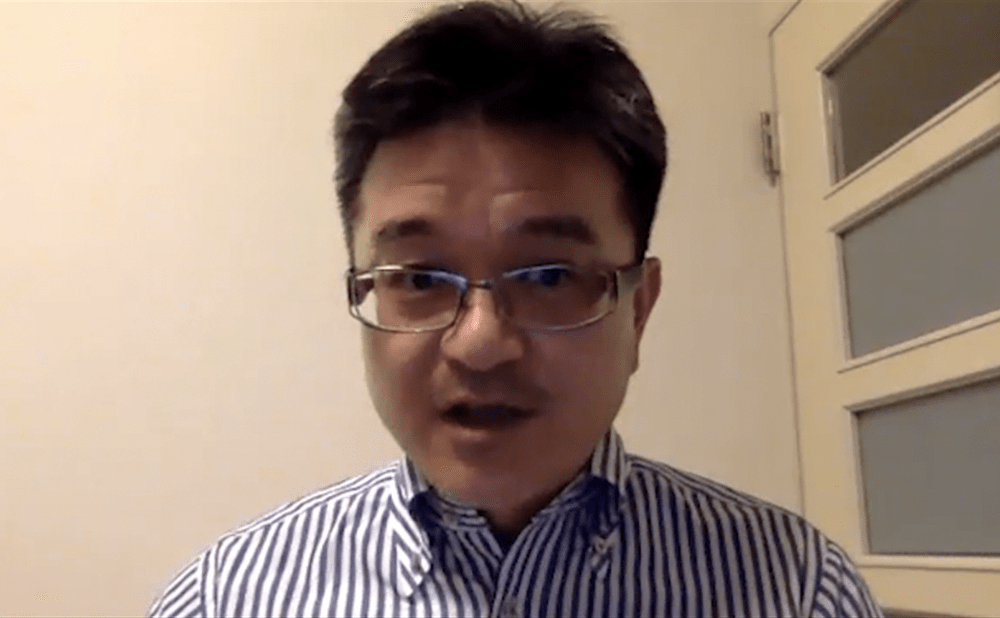
The ATS International Health Committee examined the challenges of hypoxemia assessment and equitable access to oxygen across healthcare settings worldwide.
The American Thoracic Society (ATS) International Health Committee brought together leading experts from around the world at ATS 2026 to discuss the challenges of assessing hypoxemia and improving access to oxygen therapy. The session highlighted disparities in diagnosis, treatment and care across different healthcare settings and income levels.
In this interview, Committee Chair and touchRESPIRATORY Editor-in-Chief, Prof. Richard Van Zyl-Smit (University of Cape Town and Groote Schuur Hospital, Cape Town, South Africa) reflects on the key themes discussed during the session, including disparities in oxygen access between high- and low-income settings, challenges in diagnosing hypoxemia, and the need for greater awareness, collaboration and investment to improve global lung health.
Session: C90 Advancing Hypoxemia Assessment and Oxygen Access: U.S. and International Perspectives. ATS 2026, May 15–20, 2026; Orlando, Florida, USA.
touchRESPIRATORY coverage of ATS 2026
My name is Richard Van Zyl-Smit, Professor in Pulmonology at the University of Cape Town. I am currently Chair of the International Health Committee at the American Thoracic Society and Editor-in-Chief of toucREVIEWS in Respiratory & Pulmonary Diseases.
What prompted this symposium on hypoxemia and oxygen access and why is it such an important global issue?
I chair the ATS International Health Committee and we recognized, with the Lancet’s commission on oxygen, that oxygen access is an important global issue. Not only in low-income settings, where we saw during COVID a crisis of not having enough oxygen, but also in high-income settings, where access to more domiciliary rather than in-hospital oxygen is a problem. We thought that it was an important topic to discuss and present at a forum like the international conference of the ATS.
What are the biggest challenges in identifying hypoxemia across different populations and care settings?
The issue of hypoxemia was highlighted dramatically during the COVID pandemic. We think that pulse oximeters are freely available, but they are much more available now than they used to be. So, identifying patients who are both short of breath, hypoxemic and need oxygen can be a challenge.
Then we also discussed whether racial differences, specifically around pigmentation in the skin, impact the documentation of hypoxemia and how critical the impact is in situations like critical care and COVID. There may have been enormous racial prejudice based purely on oxygenation levels as a function of skin pigment.
Where are the main gaps in oxygen access and diagnosis in the United States?
From the colleagues in the US, the biggest challenge was around domiciliary oxygen and accessing oxygen within the community. Except for the issues around skin pigmentation, which came up again, there weren’t many issues relating to accessing oxygen in the hospital setting. It was more around domiciliary oxygen, oxygen at home, and intersecting with their funding formats, who pays, how does it get paid, who looks after the individual in the community, how do they access it, who’s supporting them. In the US, oxygen is much more an outpatient issue rather than an inpatient issue.
How do challenges differ in low- and middle-income countries?
I think the major issue is access, that many small hospitals, certainly in a country like South Africa, have limited bottled oxygen. There are systems in place, for example in South Africa, but in many low-income settings, there is almost no access to oxygen. Certainly, in crisis situations where bottled oxygen runs out, accessing oxygen requires infrastructure to bring oxygen cylinders to those hospitals and piped oxygen in hospitals becomes quite expensive.
What was particularly striking was a patient presentation about the challenges of accessing home and portable oxygen in Latin America. She described how difficult it was to obtain oxygen that would allow her to continue working. Being hypoxemic does not necessarily mean someone cannot work, particularly in a desk-based role, although those in more physically demanding jobs may be limited. I have a local delivery driver who uses oxygen in his car to stay employed.
The contrast between settings was stark. In high-income countries, providing portable domiciliary oxygen is relatively routine. In lower-income settings, however, lack of access to oxygen can prevent people from working and contributing financially, despite having the potential to do so if oxygen were available outside the hospital setting.
Overall, I think there are huge differences and challenges. Obviously, a lot of it comes down to finance and cost, but also political will and resource allocation.
What do you hope attendees will take away from this session, and how could these discussions help improve global lung health moving forward?
Quite often with these kinds of sessions, you are preaching to the choir, where the people that attend are the ones that are interested. But it is important to come together – we had people whose perspectives came from low and high income settings. We even had one of the industry manufacturers with us discussing how the machines get made and the challenges they see from their side.
I think all these discussions create awareness. They create a group of people who are like-minded and willing to work together, and we raise the profile of an issue. There are multiple issues around the world in healthcare. This is just one of them. But we hope that raising the issue of oxygen access at a conference like the ATS will garner support from individuals, and we can start chipping away at a very big problem. If we don’t start somewhere, we are never going to fix the problem. Yes, we recognize that there’s a long road to go, but we felt this was an important start in that process.
Previously, we have spoken about tobacco and about COPD. Next year, we hope to talk about vaccination and cross-cutting issues that relate to both high- and low-income settings.
This content has been developed independently by Touch Medical Media for touchRESPIRATORY in collaboration with Richard Van Zyl-Smit. Views expressed are the speaker’s own and do not necessarily reflect the views of Touch Medical Media.
Disclosures: Richard Van Zyl-Smit discloses serving on advisory boards for WindwardBio, MSD, Astra Zeneca, GSK, Sanofi, and Apogee Therapeutics; and receiving honoraria from Roche, Cipla, Sanofi, Macloeds, Kenvue, HighNoon Pharma, and Grand Pharma China.
Cite: Closing the oxygen gap: International perspectives on hypoxemia assessment and oxygen access. touchRESPIRATORY. July 1 2026.
Editor: Victoria Smith, Senior Content Editor.