
We are delighted to announce Dr Mattia Nigro as a touchRESPIRATORY Future Leader 2026, selected by peers as a rising star changing the future of bronchiectasis.
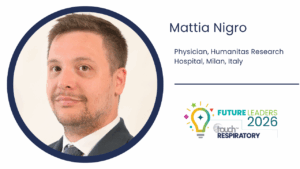
Dr Mattia Nigro is a physician in the Respiratory Unit at Humanitas Research Hospital and a PhD student at Humanitas University in Milan, Italy. His clinical and research interests focus on bronchiectasis and acute and chronic respiratory infections.
Dr Nigro is an active collaborator with the European Bronchiectasis Registry (EMBARC) and a member of the European Respiratory Society (ERS) Methodology Network. In 2025, he received the European Lung Foundation (ELF) Award at the ERS congress for his research evaluating how artificial intelligence systems answer questions from people with bronchiectasis.
In this Q&A, Dr Nigro reflects on what inspired him to pursue a career in bronchiectasis, how he balances clinical practice, research, and personal development, and the current innovations in bronchiectasis that excite him most.
New insights are added regularly, covering a broad range of subspecialties and evolving clinical scenarios. Sign up below for Free Access to the latest clinical updates in your specialty!
What inspired you to pursue a career in bronchiectasis?
My interest in bronchiectasis began when I became fascinated by the complexity and heterogeneity of the disease. I was fortunate to meet outstanding mentors early in my career, particularly Prof. Stefano Aliberti, whose dynamic vision helped me look beyond routine clinical practice and appreciate the broader challenges and opportunities within respiratory medicine. Later, I had the privilege of undertaking a research fellowship at the University of Dundee under the mentorship of Prof. James D. Chalmers. Through these experiences, I learned that bronchiectasis is a uniquely complex disease where clinical care, translational research and international collaboration are all essential to improving patient outcomes.
How do you balance clinical practice, research, and personal development?
Balancing these activities is challenging but also one of the most rewarding aspects of an academic medical career. Clinical practice keeps me connected to patients’ needs and often generates research questions, while research helps me contribute to improving future care. I try to dedicate protected time to research activities and continuous learning, while remaining flexible when clinical priorities arise. Equally important is maintaining interests outside medicine and spending time with family and friends, which helps me stay motivated, productive and resilient in the long term.
What current innovations in bronchiectasis excite you the most?
What excites me most is the growing shift towards precision medicine in bronchiectasis. Advances in phenotyping and endotyping are helping us better understand the biological mechanisms underlying this highly heterogeneous disease. At the same time, international registries and collaborative research networks are generating high-quality real-world data that can guide more personalized approaches to treatment. I am also encouraged by the increasing development of targeted therapies and novel clinical trial designs, which offer the prospect of delivering more effective treatments to the right patients at the right time.

More content in bronchiectasis.
Cite: Dr Mattia Nigro on bronchiectasis research, precision medicine and targeted therapies: touchRESPIRATORY Future Leaders 2026. touchRESPIRATORY. June 24 2026.
Disclosures: This short article was prepared by touchRESPIRATORY in collaboration with Dr Nigro. No fees or funding were associated with its publication.