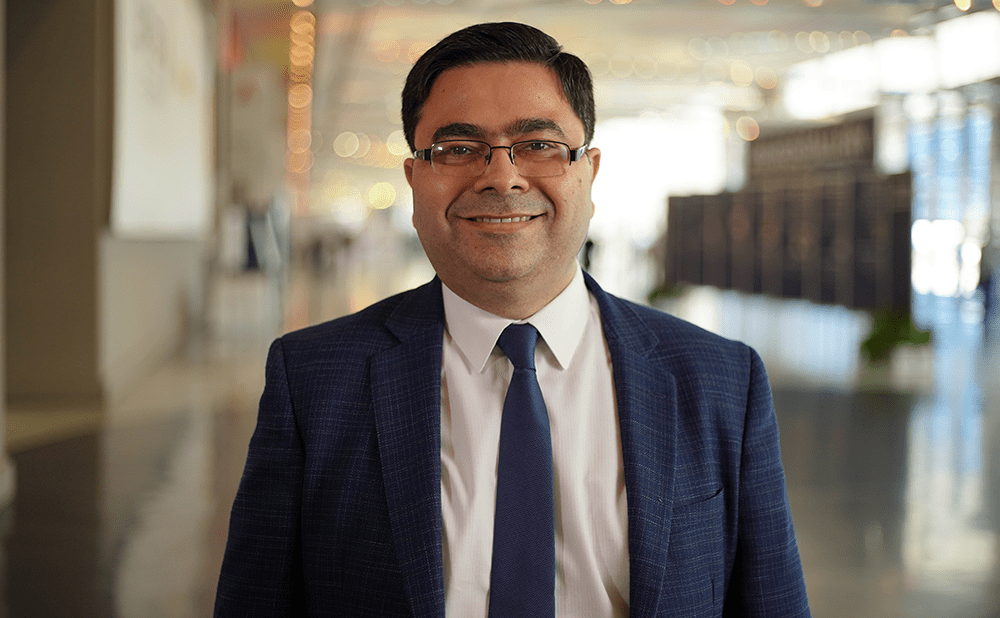
Catch up with Dr Namita Sood‘s personal highlights in pulmonary arterial hypertension from this year’s ATS meeting.

The American Thoracic Society (ATS) International Conference 2026, held in Orlando, Florida from May 15–20, brought together experts from across respiratory medicine to share the latest research and clinical advances.
In this interview, Dr Namita Sood (University of California Davis, Davis, CA, USA) discusses her personal highlights from ATS 2026, reflects on her patient-centred presentation at the meeting, and shares her perspectives on emerging treatments, evolving approaches to PAH assessment and management, and the key research and care priorities for the future.
touchRESPIRATORY coverage of ATS 2026
My name is Namita Sood. I’m a pulmonary critical care physician and I am the Director of the Advanced Lung Disease Program at University of California Davis, and I have been in the pulmonary hypertension space for 30 years now.
What were your personal highlights from the ATS meeting?
It was a big meeting for pulmonary hypertension. We had a couple of studies read out. One was the ADVANCE trial, which evaluated ralinepag, a once-a-day oral prostacyclin agonist. The nice part of this was that the findings were positive. Ralinepag is a once-daily treatment, which is particularly exciting because oral prostacyclins are often associated with a lot of side effects.
Then the seralutinib study unfortunately did not achieve prespecified alpha threshold of 0.025, but I believe the drug has demonstrated effectiveness and hope its development continues.
The third highlight was the emerging real‑world experience with sotatercept, which has demonstrated meaningful clinical improvement both in patients already receiving maximal background therapy and in those newly diagnosed. Since its introduction to the market approximately two years ago, accumulating real‑world data has provided valuable insight into expected treatment responses and how patients are tolerating the medication outside of clinical trial settings. Overall, it was a very good meeting for pulmonary hypertension.
Could you tell us about your presentation at this year’s event?
We did this session with Medscape, and I thought it was a very interesting format. Across medicine, there’s increasing recognition that the patient perspective should be incorporated into everything we do, from drug development to clinical guidelines. This session provided a great example of how that can be done in a live educational setting.
It was very patient centred, with patients sharing their experiences. We also had a patient participate, which allowed us to discuss the disease state and the therapeutic decisions made throughout their care journey with the patient present. I thought that was a very interesting format, and it gave us a roadmap of how to incorporate the patient voice into medical education.
Were any new treatments or diagnostic approaches covered at the conference that could change PAH care?
I think it’s really a reflection of where the field is headed. As we develop more therapies, we need to look at different ways to assess response and establish a new set of outcomes that can be used to determine whether these therapies are effective.
Right now, there’s a lot of focus on imaging as an assessment modality. However, the key question is how the changes we see on imaging translate into how patients feel and function. Ultimately, those are the types of outcomes the FDA uses to evaluate and approve therapies. It’s still very much a work in progress.
What challenges in managing PAH stood out during the sessions?
I think the biggest challenge right now, and it’s a very good challenge to have, is continuing to reassess how we manage the disease states. Traditionally, pulmonary hypertension has been classified into distinct groups, such as Group 1 and Group 2-5, based largely on the underlying cause of the disease and how the patient would respond to prostacyclin therapy. That was essentially how the current classification system was developed.
Now, with newer therapies that work very differently from traditional vasodilators, it’s important to revisit how we classify pulmonary hypertension. We also need to reevaluate our treatment algorithms and determine the optimal sequencing of therapies for patients. Of course, these questions will need to be studied carefully to ensure that we ultimately get it right.
Which areas of PAH research or care need the most attention moving forward?
It is important to recognize that very few patients fit neatly into the classic definitions of pulmonary hypertension. In real-world practice, physicians often have to exercise clinical judgment and take some liberties when treating these patients.
As more therapies become available, we need to make a concerted effort to include these patients in clinical trials. That will give us a better understanding of whether they experience the same benefits observed in select study populations and whether these therapies remain safe over the long term.
As we develop new treatments, research needs to include a wider range of patients that more accurately reflects those who are ultimately treated in clinical practice.
From a care perspective, access and affordability remain major challenges. Ensuring that patients can receive care at appropriate specialized centers is also critically important. Often, patients are either undertreated or placed on therapies that they don’t need or benefit from, but specialized centres can control for that.
This content has been developed independently by Touch Medical Media for touchRESPIRATORY in collaboration with Namita Sood. Views expressed are the speaker’s own and do not necessarily reflect the views of Touch Medical Media.
Disclosures: Namita Sood discloses consulting for United Therapeutics; and receiving grant/research support from Merck, United Therapeutics, Gossamer, Pulmovant, and AlRoc.
Cite: The evolving PAH landscape: Highlights from ATS 2026. touchRESPIRATORY. June 12 2026.
Editor: Victoria Smith, Senior Content Editor.