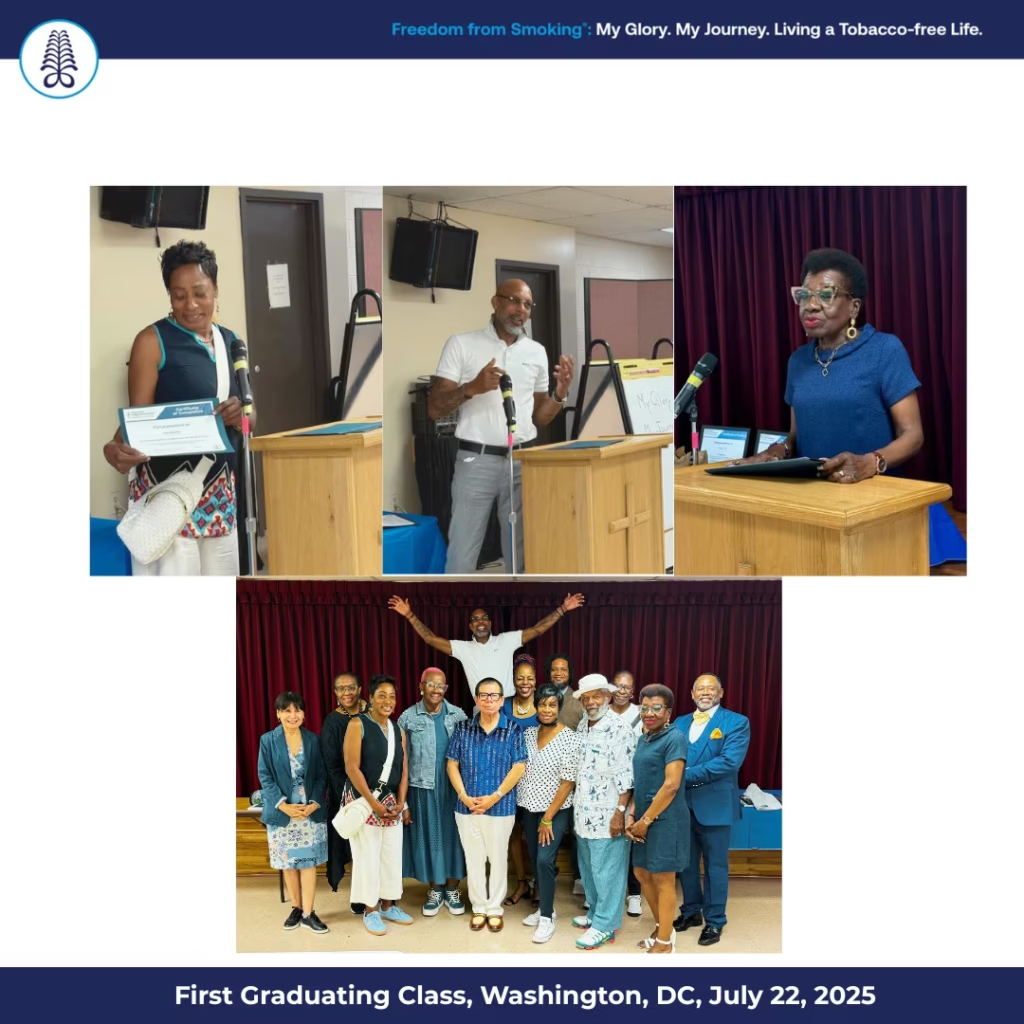
 The American Lung Association (ALA) just completed their newly piloted freedom from smoking program curriculum, tailored to black communities ‘Freedom From Smoking®: My Glory. My Journey. Living a Tobacco-Free Life‘. Hosted in Washington DC, the team at HMA Associates partnered with a local church to successfully recruit 7 participants.
Completion of the program was achieved by 100%, with all participants attending each session, with 50% successfully quitting and 40% significantly reducing their tobacco use. Since the program came to a close, however, we have received an update from the team that 6 of the 7 individuals have successfully ended their tobacco use, and the remaining individual plans to quit, bringing us to an 85% quit rate!
“The vision that the American Lung Association had to adapt what is considered the gold standard in cessation programming for the Black community is a testament as to the power of culturally tailored content that will move people into action. The core symbol of the aya which was integrated into the curriculum reflects the resiliency that the Black community demonstrates on a daily basis. This resiliency is an honored practice that helps support the trust that is inherent part of the facilitation process for the curriculum. Undoubtedly the combined trust and resiliency that emerge through the My Glory clinics will be essential as participants move towards quitting.” – Carlos Velázquez, MA, HMA Associates, Inc.
Lessons learned from this pilot program include:
- The role of trust in the facilitation process needs to be established from the onset. The more the facilitator can come to the group with a similar lived experience from the group the better.
- Active participation and sharing among all participants in the group was crucial. The participants shared many personal stories which fostered trust and comradery across the group.
- The theme of resiliency and family were salient for the participants, meaning that they saw themselves as survivors of many types of hardships and that smoking was a coping mechanism.
- Weight gain and stress were critical issues that came up often, so destressing exercises were highly valued by the participants.
- The participants were spiritual and insisted on praying before and after each session. Thus, for the ALA facilitator training we will provide tips on how to address diversity in faith practices.
- For faith-based settings, such as this one, the facilitators willingness to go to their church and sit with them to worship made a difference.
- The facilitator listening to participants share their stories without judgement every single time made for a safe space for them to share their experiences openly and was the core of building trust in the process and amongst each other.
Further content in lung health.
Editor: Victoria Smith, Senior Content Editor.
Disclosures: This short article was provided to touchRESPIRATORY by the the American Lung Association (ALA). No fees or funding were associated with this short publication. Image: © 2025. ALA.
Cite: The American Lung Association pilot program for smoking cessation. touchRESPIRATORY. 8 September 2025.
Related content
- How aware are medical students of third-hand smoke risks?
- Targeting a Rare and Aggressive Lung Cancer: A Study of Inhaled Osimertinib for Malignant Pleural Mesothelioma: Mural Quadros, ATS 2025
- Cytisinicline for Smoking Cessation in Adult Smokers
Register now to receive the touchRESPIRATORY newsletter!
Don’t miss out on hearing about our latest peer reviewed articles, expert opinions, conference news, podcasts and more.